
The Underground Man Rises
Bernie Goetz and the 50th Anniversary of “Taxi Driver”

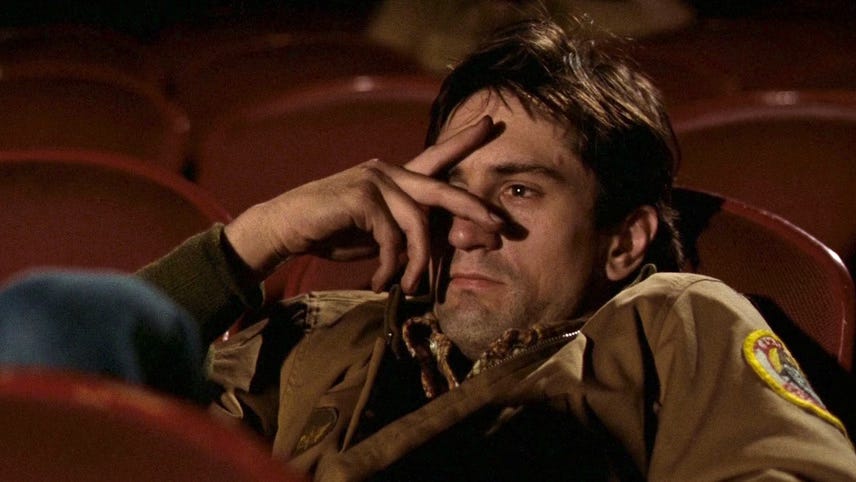
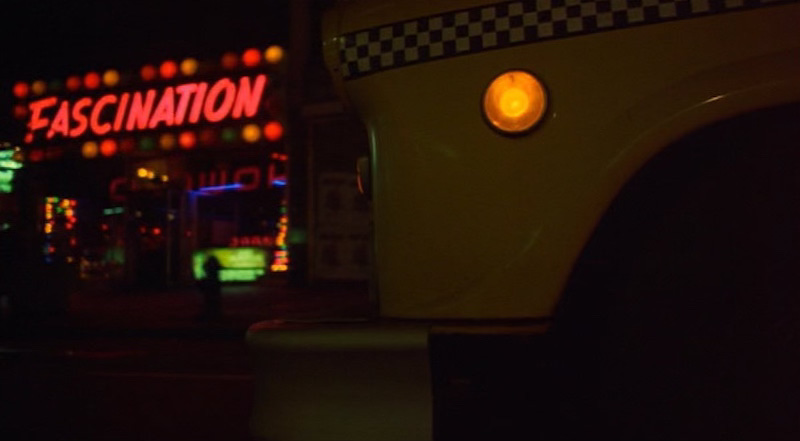
A few months after Taxi Driver was released on February 8, 1976—fifty years ago this week—my parents moved from 875 West End Avenue in Manhattan to Montrose, a small commuter down an hour north on the Hudson line. My mother had been in the States for a decade, all in Manhattan, and with three young children, my father’s show business career struggling, and the congestion—and perils—of the city, she pined for a house with a back yard, a picket fence, a garden to grow.
My folks could not afford to send my sister and me to private school and my father worried about the public school we’d attend. Montrose offered a patch of grass and a better school system. Dad wasn’t abandoning his hometown, just doing the right thing by his family. He wasn’t scared, and neither was my mother. She had never been mugged in New York.
As Richard Corliss wrote in his New Times review of Taxi Driver:
“Statistics show that New York is the safest of America’s 13 largest cities. But people don’t look at statistics. They look at Johnny Carson, who jokes about crime in New York were probably responsible as anything else for scaring businesses and conventions away from Manhattan. And now they’ll look at De Niro’s twisted grin as he says, ‘You talkin’ to me?’ (Want to keep New Yorkers barricaded in their homes for good? Play a double feature of Taxi Driver and The Talking of Pelham 123.) If Taxi Driver becomes a hit, it won’t be because it’s brilliantly made but because it feeds the Death Wish fantasy of too many Americans.”
Tragically, one of those Americans was John Hinckley, who, in 1981 inspired by Taxi Driver—and a fixation on Jodie Foster—attempted to assassinate President Reagan.
If Bernard Goetz didn’t relate his December 1984 shooting of four teenagers in a New York city subway car to Taxi Driver, it was hard not to make the connection. Goetz didn’t have DeNiro’s coiled body language or his supreme remoteness, but there he was, the underground man in the flesh. Goetz lived in Manhattan but hated it, too. He was an unapologetic racist who, by 1984, a year after Clint Eastwood’s Dirty Harry famously dared a thug: “Go ahead, make my day,” was spoiling for confrontation.
Our living Travis Bickle.
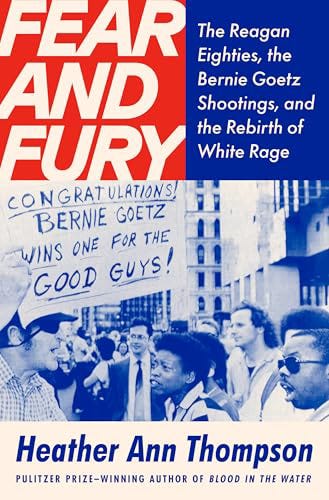
Goetz, who is still alive, still bigoted, and still resides in Manhattan, is the subject of two new books, Fear and Fury: The ReaganEighties, the Bernie Goetz shootings, and the Rebirth of White Rage by Heather Anne Thompson and Five Bullets: The Story of Bernie Goetz, New York’s Explosive ’80s, and the Subway Vigilante Trail That Divided the Nation by Elliot Williams. In Thompson’s capable hands, the Goetz case offers a riveting look at the politics of New York—and the country—during the Reagan years. In addition to Goetz, she touches on the other race-related cases of the period, such as the Yusef Hawkins murder and the gross mistreatment of the Central Park Five, particularly at the hands of the son of a businessman named Trump.
Thompson writes:
“Another form of violent crime, one in which white Americans like Bernie Goetz were much less interested, was also showing a particularly alarming upward trend: white on-Black crime.
“The year 1982 saw a thirty-four-year-old transit worker named Willie Turks chased down by a white mob shouting racial epithets who then beat him to death. In 1983, a subway graffiti artist named Michael Stewart was also beaten to death, this time by transit cops. The 1984 murder of a woman named Eleanor Bumpurs by a police officer in the South Bronx, as well as the killing of multiple Black residents of Buffalo, New York, apparently by the same assailant who always used a .22 caliber pistol, terrified New York’s Black community too.
“All of these acts, and still others, suggested white racial rage was reemerging as a serious problem in America. And yet, the uptick in the nation’s general ‘crime problem,’ as explained by politicians and portrayed by the media, was the fault of minorities.
“All of this only added to Bernie Goetz’s determination to carry a gun. By 1984, not only did Bernie own four guns, but he had begun carrying an unlicensed weapon at all times so that he could readily flash it at, and perhaps even pull it on, someone who might be a threat.”
I’m the only one standing here…
Dirty Harry came first, in 1971, followed by Death Wish in ’74, the Vigilante All Stars. By the time, I began my unsentimental movie education in the early ’80s, these were joined by grimy New York fare of the time: The Warriors, Fort Apache, the Bronx, Fingers, Wolfen, Nighthawks. Taxi Driver held its own mystique, a rite of passage for a teenage boy, as much as watching A Clockwork Orange or Apocalypse Now.
A main concern was scaring the bejesus out of ourselves. In some cases, that meant enduring The Texas Chainsaw Massacre or Driller Killer—but I never had the constitution for gore. Taxi Driver felt like a nightmarish version of real life, and it carried the scars of the Vietnam war in a quiet, undeniable manner (Travis Bickle, played by Robert De Niro, is a Vietnam vet; as is Al Pacino’s bank-robber in Dog Day Afternoon). The war didn’t need to be revisited in flashbacks, because Bickle is like a ghost soldier. Even as a young viewer, I understood the impact of the war more intensely in Taxi Driver than in Coming Home or The Deer Hunter. As a Marine, what did Bickle witness? What had he done?
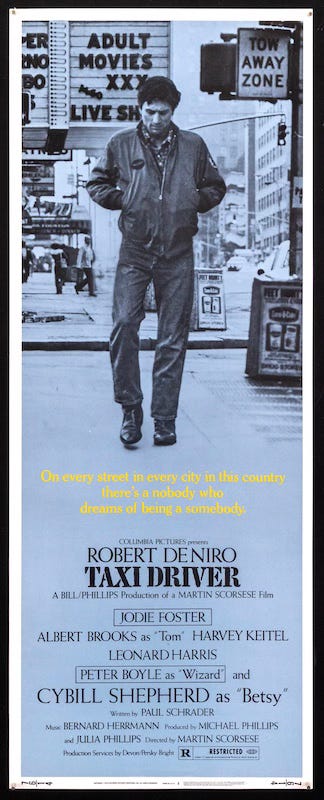
As Scorsese explained in Scorsese on Scorsese:
“It was crucial to Travis Bickle’s character that he had experienced life and death around him every second he was in Southeast Asia. That way it becomes more heightened when he comes back; the image of the street at night becomes more threatening. I think that’s something a guy going through a war, any war, would experience when he comes back to what is supposedly ‘civilization.’”
Ronald Reagan, who declared “The Vietnam Syndrome over” and who called the cause honorable and would have sent many more Travis’ to serve and die and do the things American soldiers were asked to do in Vietnam—was almost killed by a Travis-inspired loon.
That is not tragedy; that is irony.
When my grandfather, a poised, thoughtful man, took me on the subway one afternoon, I felt dizzy watching him walk to the edge of the platform and lean over the edge to look into the dark tunnel for sign of an approaching train. I thought he would fall on the tracks and scanned the platform for anyone who might come and push him. Once, the train arrived, a big dude stared at me and wouldn’t turn away. I averted my eyes, looking around the car littered with graffiti tags, and when I returned to him, he was still staring. The sensation of someone clocking you was commonplace.
The reality that you could get robbed every time you were on the street was a given. When I walked west from my grandparents’ apartment on 82nd Street between Central Park West and Columbus, a couple of blocks to Broadway, I had to traverse Amsterdam in between. People hanging out on brownstone stoops, the sounds of Willie Bobo and Ray Barretto pounding on boom boxes; I knew which blocks, and which sides of the street to avoid.
The main reasons I didn’t get mugged growing up is because I went to middle school and high school in the suburbs and only visited New York on the weekends and for stretches during the summer. And I got lucky. My father, who never backed down from a confrontation, trained me in the art of not getting jumped. Walk with your head up, ears open. Wallet in your right-hand pocket, keys in your left; always have the keys out, holding the front door key, a block away from home. Don’t be a hero, give up your wallet. And when in doubt: run.
By the time of the Goetz shooting, my folks were divorced and we’d visit my father on the weekends. The Metro North train snaked through the South Bronx, passing Yankee Stadium on the way. Less than a mile after that, an empty white billboard stood and written in big black letters: “Don’t get mad, get even.”
My father was already to fight, but he never carried a weapon. His mouth and attitude got him by—I don’t know if he was ever bullied or backed down from minor skirmishes, it’s possible. But he always seemed prepared to fight, though it occurs to me that real brawlers aren’t just prepared but strike first. My mother knew how to protect herself, too. When we watched a movie where a woman was being attacked she’d yell, “kick him in the balls, kick him in the balls!”
In my mid-twenties I worked as a waiter on the Upper West Side. After a dinner shift, I’d take the train to Brooklyn with a few of the Bengali guys who bussed tables. One hot summer night in 1995, we stopped by another restaurant after our shift to pick up one of the busser’s friends. I leaned against a tree outside of the restaurant as we waited. A panhandler stood outside too, when a strapping guy, handsome and drunk, exited the place with his girlfriend and started insulting the homeless guy.
Without thinking I said, “I bet you think you’re pretty fucking tough.”
The guy brushed past the panhandler and got directly in my face. He was big and he was ready. Words spilled out of my mouth but I refused to yield ground. He moved even closer, and I didn’t budge even though I was apologizing.
Satisfied, the dude turned back to his date, who’d been yelling at him to stop, and they walked away. At which point the panhandler, infuriated, took out an exacto blade in his right hand and started after them. I put myself in his path, placed my hands on his chest. He stopped but kept cursing the dude out.
A short while later, on a downtown A train that rocked along, one of my Bengali co-workers, a small, runtish kid who’d recently arrived in the country kept asking me, “Why you help, Black? Why you help this man?”
It made no sense to him. All I knew was that in talking shit to the bully outside the restaurant—righteous or not—I’d written a check my ass could not cash.
A couple of weeks later, I found myself on the A Train again late at night. This time I was alone. I had a sketchbook in my lap when a gang of kids got in the car and surrounded me. There was at least a dozen of them. In high spirits, a few with a gleam in their eye.
I said something self-deprecating about the self-portrait in my sketchbook looking like Eddie Munster and one of them mocked me, “Eddie Mun-stah” while a few more laughed, their menace clear. They were not going to be won over.
When the train arrived at the next station we were at West 4th Street. I waited for the train to stop and the doors to open. I didn’t move. Then in one swift motion, I grabbed my knapsack and in two strides exited the train before the doors closed. Close call averted. Cowardice, or so I believed, intact.
I walked home from the subway station that night, convinced of my softness, a main preoccupation of the time. I looked around me with the slow, glassy-eyed Travis Bickle stare, as if assuming this guise would make me invisible. When I got home, I called a friend who got beat up regularly as a kid on the Upper West Side and he told me I did the smart thing. “What were you going to do, dummy, fight all of them?”
There are still times when, without thinking, I assume that Travis Bickle mask, body rigid, almost coiled, prepared to be attacked. A few weeks ago, I stayed with a friend in a part of the city I did not know. I kept my phone in my pocket because I didn’t want anyone to catch me following directions on MAPS; I used to rely on instinct.
Passing a vegan burger joint with an “ICE IS NOT WELCOME HERE” poster in the front window, I caught the reflection of a red streetlight in a puddle, giving the city that hallucinatory feel Scorsese captured in Taxi Driver. It’s hard not to laugh during Scorsese’s urban horror movie—that uneasy, nervous kind that speaks to our deepest fears, including the fear of “them.” We cannot unsee the fear and deranged fury that gripped Bernie Goetz, especially now. Not after Chicago. And L.A. And Minnesota, and whatever violent little Travis Bickle dressed in ICE gear does next.
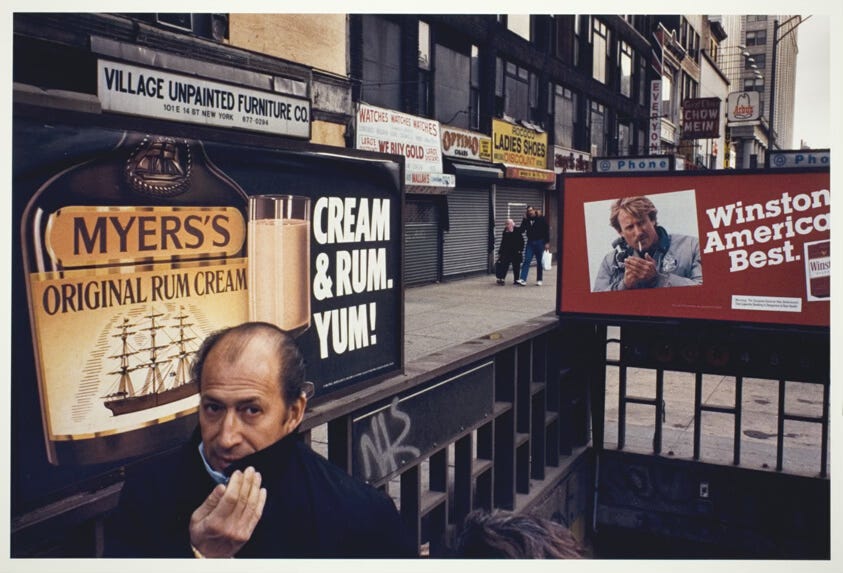
[Photo Credit: Patrick Pagnano, 1984 via The Art Institute of Chicago]
Fantastic take on how Taxi Driver became a blueprint rather than just a warnning. The way Goetz became a living Travis Bickle shows how cinema can validate the worst impulses when people are looking for justification. I grew up in a diffrent city but remember that same constant scanning for threats mentality in the 90s. What really got me was the connection between military trauma and urban paranoia - how Bickle's Vietnam experience made him see threats everywhere.
I visited New York for the first time in December of 84. I was 17 and my mom was trying to decide whether or not to move us to Connecticut to relocate with her job. The Goetz story was fresh and a couple of our cabbies shared their opinions of him. There was also a garbage collectors strike and mountains of trash bags towered over sidewalks. One afternoon we stopped in a hotel bar and my mom spotted Bob Uecker sitting on a stool. She encouraged me to ask him for his autograph, so I walked over and said, “Excuse me, Mr Uecker.” He turned around and I realized he was deep in conversation with a woman sitting next to him. He said, “Beat it, kid” and spun back to the bar.